
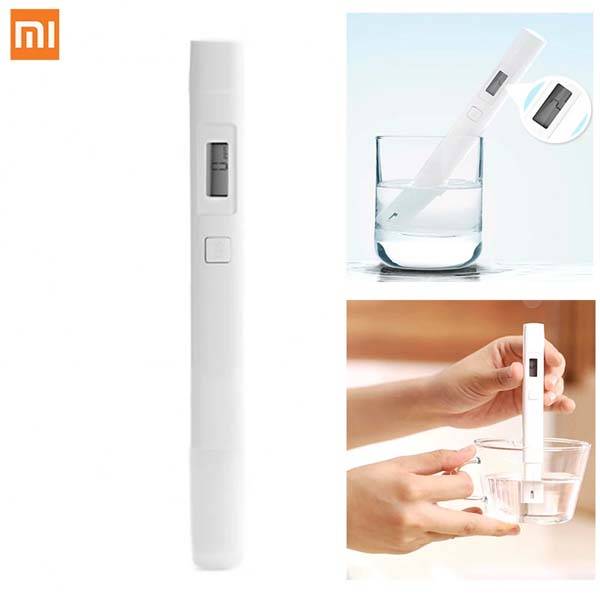
Xiaomi TDS Meter Water Quality Tester Pen
৳2000
৳1050
48% OFF
Corporate & Bulk Orders
Need a custom quote? Contact our Sales Team on WhatsApp for exclusive pricing and quick responses.
WhatsApp UsCategory: Accessories
The Xiaomi TDS Meter Water Quality Tester Pen is a precision instrument designed to help you determine the purity of your drinking water in just 3 seconds. By measuring the total dissolved solids, including minerals and salts, this compact device provides an essential health-conscious tool for your home. Its advanced microprocessor technology and easy-to-read LCD display ensure you receive accurate and reliable data every time you test your water supply.
Tds meter: Key Takeaways
- Rapid Results: Stabilizes reading in just 3 seconds for immediate water analysis.
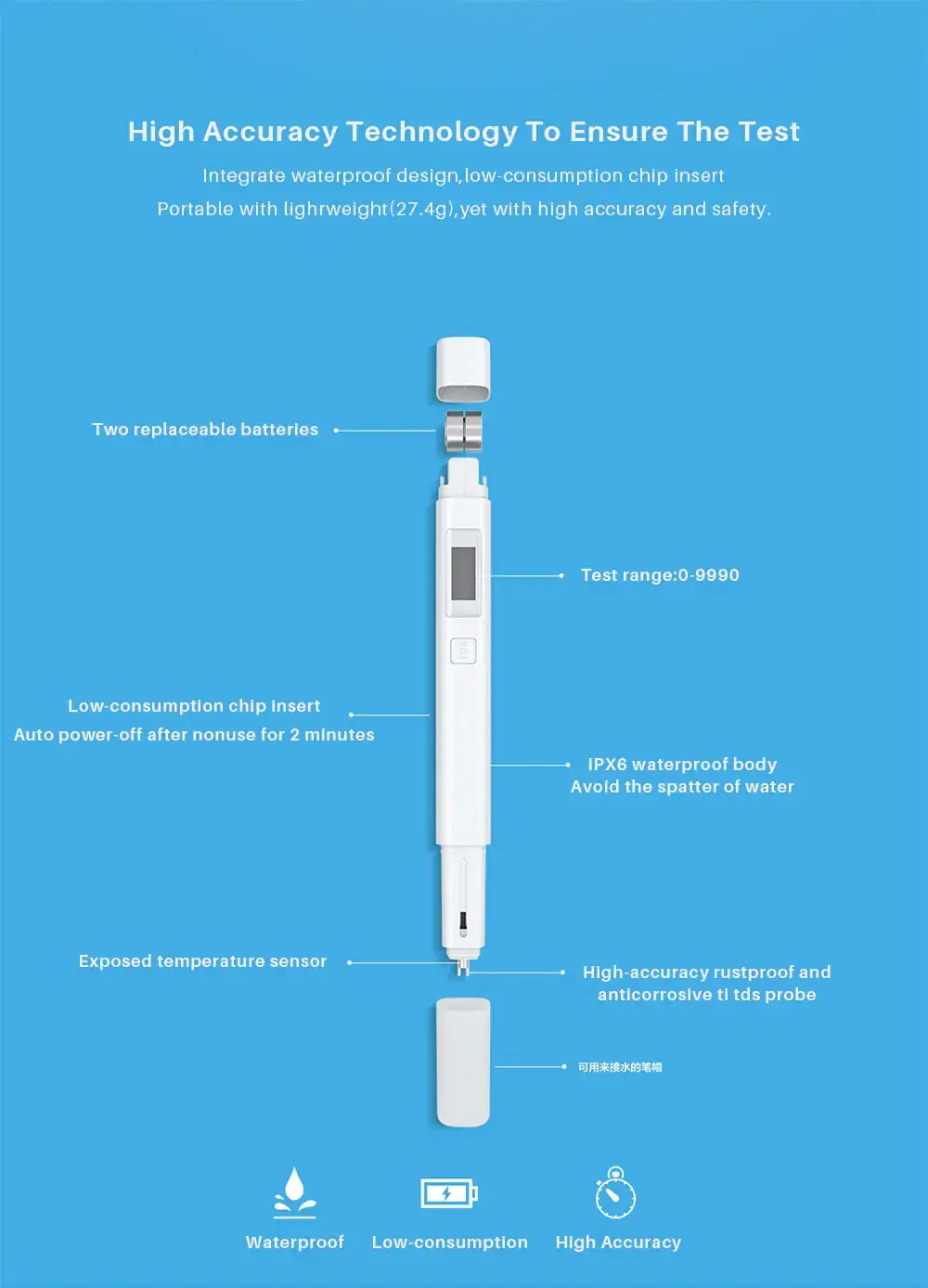
- Broad Range: Measures total dissolved solids from 0 to 9,990 parts per million.
- User-Friendly: Features a large LCD display, auto-off functionality, and a data hold button.
- Professional Standards: Factory-calibrated with a 342 parts per million NaCl solution for consistency.
What is the Xiaomi TDS Meter Water Quality Tester Pen?
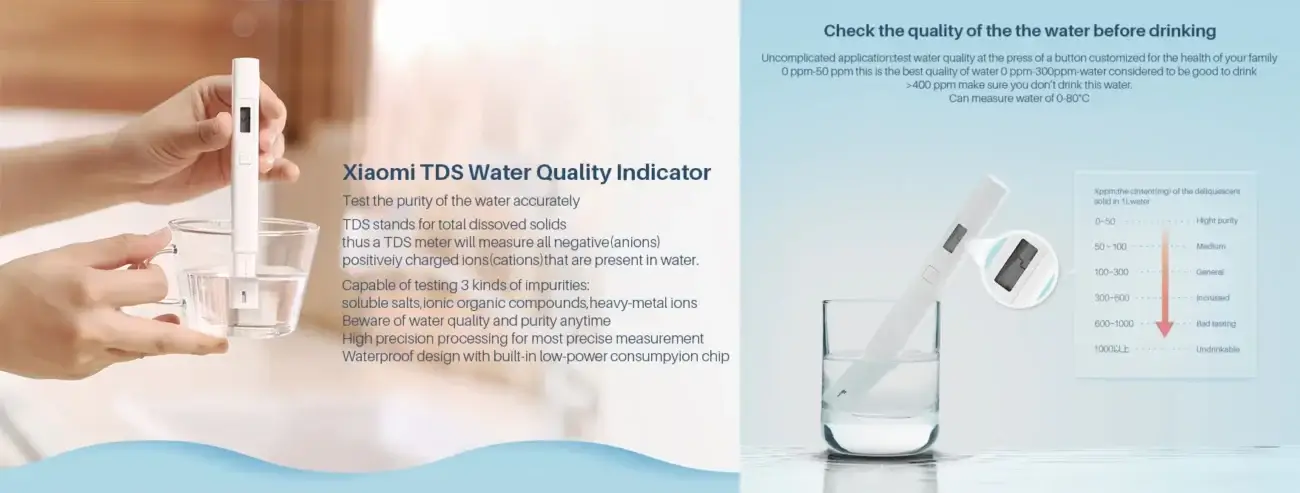
The Xiaomi TDS Meter is a portable, economical testing tool used to analyze the concentration of total dissolved solids in liquid. In water science, parts per million—or ppm—is the standard measurement unit used to identify how much inorganic matter exists in your glass. This device makes it simple for consumers to monitor the quality of their tap or bottled water without needing expensive laboratory equipment.
Key Features
- Advanced Microprocessor: Utilizes high-efficiency technology to process readings with impressive accuracy.
- Data Hold Function: Easily lock your measurement on the screen to record findings away from the water source.
- Recalibration Support: Includes a mini-screwdriver port, allowing users to manually adjust and maintain the device over time.
- Energy Conservation: Automatically shuts off after 10 minutes of inactivity to extend the life of the 2 internal batteries.
- Robust Design: Constructed with a durable, translucent blue housing that is both functional and aesthetically pleasing.
Technical Specifications
- Brand: Xiaomi
- Measurement Range: 0-9,990 ppm
- Resolution (0-999 ppm): 1 ppm increments
- Resolution (1,000-9,990 ppm): 10 ppm increments
- Detection Time: 3 seconds
- Weight: 27.4g
- Calibration: Factory set at 342 ppm NaCl
Why Health-Conscious Households Choose This
Many families use this meter to compare their filtered tap water against commercial bottled products. For instance, high-purity bottled water typically measures around 1 part per million, while tap water may vary significantly depending on your local municipal treatment processes. Having a clear numerical figure helps you justify maintenance schedules for your reverse osmosis or charcoal filtration systems.
Use Case 1: Testing Filtration Systems
Whether you own a countertop filter or an under-sink system, this meter serves as a maintenance guide. By taking periodic samples, you can identify when your filter media is exhausted and requires replacement, ensuring you always enjoy clean, low-mineral water.
Use Case 2: Aquarium Maintenance
Aquarium enthusiasts often use the Xiaomi TDS Meter to check the purity of water before adding it to delicate freshwater or marine tanks. Ensuring that your water parameters match the specific needs of your fish and plants is crucial for their survival, and this tool offers a quick check to prevent mineral spikes.
What's Included
- Xiaomi TDS Meter unit
- Pre-installed batteries (rear compartment)
- Reference chart sticker
- User manual
How to Use the Xiaomi TDS Meter
To obtain a reliable reading, start by rinsing the sensor tip with distilled or deionized water. This removes any contaminants that could affect the measurement. Press the power button; the large LCD will light up and show a zero baseline. Submerge the tip at least two centimeters into the water sample, making sure it does not touch the bottom of the container. Wait for the display to stabilize; the device locks the value in approximately three seconds. If you need to record the result elsewhere, press the Hold button to freeze the reading on the screen. After noting the value, rinse the tip again and store the meter in its protective case to keep the sensor clean and dry.
Step‑by‑step quick reference
- Rinse tip with distilled water.
- Power on the device.
- Immerse tip ≥2 cm in sample.
- Wait ~3 seconds for stable reading.
- Press Hold to lock value (optional).
- Rinse tip and store.
Who Benefits Most from This Meter
The Xiaomi TDS Meter is versatile enough for a variety of users who need quick insight into water purity without laboratory equipment.
- Homeowners with filtration systems: Verify that reverse osmosis, carbon block, or ceramic filters are performing as expected.
- Aquarium and pond keepers: Ensure top‑off water matches the tank’s mineral baseline before adding livestock.
- Hydroponic growers: Monitor nutrient solution strength to avoid over‑ or under‑feeding plants.
- Coffee and tea enthusiasts: Check brewing water hardness, which can affect extraction and flavor.
- Parents preparing infant formula: Confirm that boiled or nursery water has low dissolved solids for safe mixing.
- DIY water‑testing hobbyists: Use as a quick screening tool before sending samples for lab analysis.
Maintenance and Care
Proper care extends the lifespan of the sensor and maintains measurement accuracy.
- Always rinse the tip with distilled water after each use; avoid using tap water for rinsing as it may leave mineral deposits.
- Store the meter in a dry case; excessive humidity can corrode the internal contacts over time.
- Keep the device away from direct sunlight or high temperatures (above 45 °C) which can affect the LCD and battery performance.
- When the display begins to dim or becomes unresponsive, replace the two internal batteries according to the polarity diagram in the manual.
- The unit includes a mini‑screwdriver port for recalibration; if you suspect drift, use a known‑value calibration solution (e.g., 342 ppm NaCl) and follow the manual’s adjustment procedure.
- Avoid touching the sensor fingers with oily or dirty hands; oils can create a film that interferes with conductivity readings.
Buying Guidance
When selecting a TDS pen, consider how the Xiaomi model aligns with your testing needs and habits.
- Verify the package contains two pre‑installed batteries; this eliminates the need to purchase power cells separately.
- Check that the housing is intact and the translucent blue casing shows no cracks, which could expose the sensor to moisture.
- Look for the factory‑calibration sticker indicating 342 ppm NaCl; this ensures the device is ready for accurate out‑of‑the‑box use.
- If you frequently test very low‑mineral water (e.g., distilled or reverse‑osmosis output), the 1 ppm resolution below 999 ppm provides the granularity you need.
- For high‑mineral sources such as hard tap water or brine, the 10 ppm resolution up to 9,990 ppm prevents the display from rolling over.
- Consider the auto‑off feature (10 minutes of inactivity) as a battery‑saving benefit, especially if you tend to forget to power down the device.
- The Hold function is valuable when you need to move the meter away from the water source to record the reading in a notebook or app.
- Compare the overall weight (27.4 g) and pen‑style form factor; a lightweight design is easier to carry in a pocket or toolkit.
Comparison with Other TDS Pens
While many TDS pens share the basic principle of measuring electrical conductivity, specifications can vary widely. The Xiaomi model distinguishes itself in several concrete ways.
- Measurement range: Some budget pens cap at 1 990 ppm or 2 000 ppm, limiting usefulness for hard‑water areas; this unit reaches 9 990 ppm, covering most municipal and well‑water supplies.
- Resolution granularity: Many pens use a fixed 10 ppm step across the entire scale, which can mask subtle changes in low‑mineral water; here the resolution is 1 ppm from 0‑999 ppm and 10 ppm only above that threshold.
- Power source: Certain pens rely on replaceable AAA or coin cells that must be purchased separately; this device ships with two internal batteries already installed.
- Hold capability: Not all pens include a data‑hold button; the Xiaomi version lets you lock the reading for easier note‑taking.
- Auto‑off timing: Some models shut off after 30 seconds, which can be inconvenient during repeated sampling; the 10‑minute delay balances battery life with usability.
- Calibration status: While many pens require the user to buy a calibration solution and perform the adjustment themselves, this meter is factory‑set at 342 ppm NaCl, providing a reliable baseline right out of the box.
These distinctions make the Xiaomi TDS Meter a practical choice for users who need both low‑range sensitivity and high‑range capacity without purchasing multiple devices or additional accessories.
- Full refund available
We accept returns for eligible items within 2 days from the date of delivery. To be eligible for a return, the item must be unused, in its original packaging, and in the same condition as when you received it. Items that are non-returnable include [list any specific non-returnable items such as perishable goods, intimate items, etc.]
At adatun.com, we are committed to protecting your privacy and ensuring the security of your personal information. This Privacy Policy outlines how we collect, use, disclose, and protect the information you provide to us. By using our website, you consent to the practices described herein.
- The Xiaomi TDS Meter comes factory-calibrated with a 342 parts per million solution. For typical household water quality testing, frequent recalibration is not required. However, if you notice the device consistently provides unlikely readings or has been subjected to significant physical impact, you may use the provided port and a mini-screwdriver to adjust it against a known standard solution.
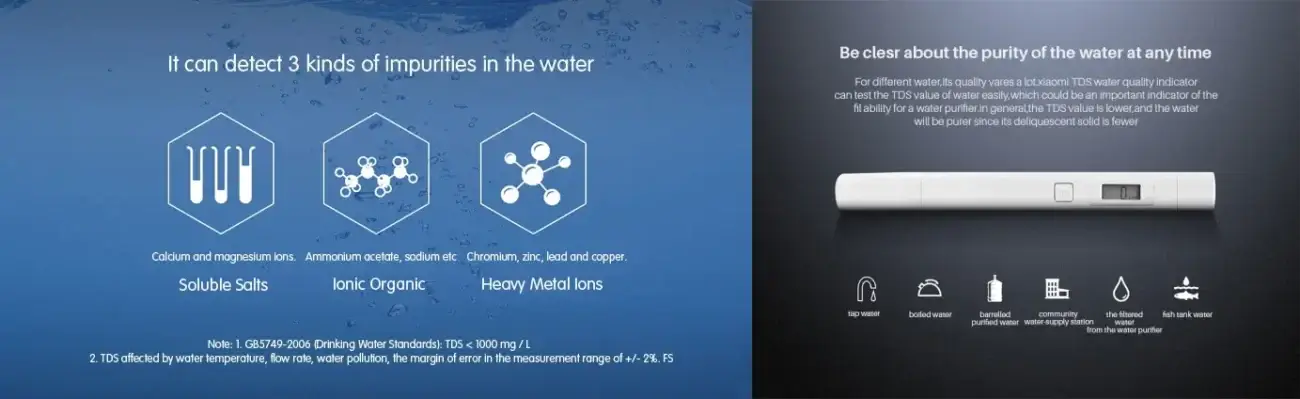
- The Xiaomi TDS Meter identifies the total concentration of dissolved solids, such as minerals and salts, expressed in parts per million. It does not perform chemical analysis to distinguish between individual substances like calcium, magnesium, or heavy metals. It serves as an aggregate measure of purity rather than a comprehensive laboratory-grade profile of all existing substances.
- The Xiaomi TDS Meter is designed for optimal performance in liquids at standard room temperatures. Using the device in extremely hot water can affect the internal sensor's electronics and lead to inaccurate measurements. For the most consistent results, always collect a water sample in a clean container and allow it to cool to room temperature before inserting the testing pen.
- The Xiaomi TDS Meter screen displays an 'x10' indicator when your water reading exceeds 1,000 parts per million. This simply means the value currently on the LCD display should be multiplied by 10 to obtain the correct concentration. This feature allows the device to measure high-salinity or high-mineral water up to 9,990 parts per million while keeping the display compact and readable.
Related in this store
- home water filter— Complements the testing tool by providing the filtration source.
- precision toolkit— Useful for small repairs around the home, similar to the precision needed for the TDS pen.
- rechargeable batteries— Essential accessory for high-drain home gadgets.
Sources
- World Health Organization Guidelines for Drinking-water Quality— Provides authoritative context on what constitutes safe drinking water standards.
- EPA Drinking Water Standards— Reference for common water quality parameters monitored by regulatory bodies.
Reviewed by Adatun Product Team, Lead Merchandiser — reviewed by our category experts